MIRA

TREATMENTS

MIRA CLINIC

Kids Dentistry

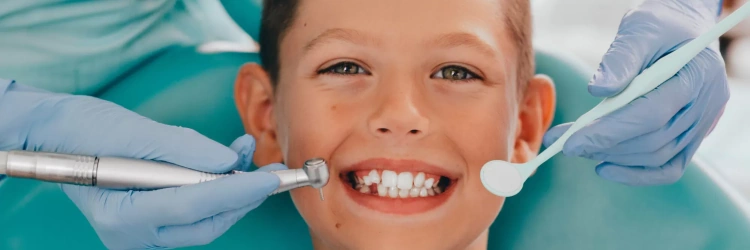
We also provide services aimed at maintaining the oral and dental health of our patients up to the age of 15, targeting normal jaw and occlusion development. These services include prevention of cavities, treatment of decayed primary and permanent teeth, preservation of the positions of permanent teeth after early extraction, treatment of traumatized teeth, and surgical exposure of impacted teeth to facilitate their eruption. Additionally, we aim to prevent incorrect habits.

Fissure Sealant

What is a Fissure?

Fissures refer to the grooved and cleft surfaces on the teeth.

What is Fissure Sealant?

It is a material that covers the indentations and hollows, i.e., fissures, on the surface of a tooth. The procedure of applying this material is called fissure sealing. It is a straightforward, painless procedure that is highly effective in preventing cavity formation. Fissure sealing is an ideal treatment method for children who may have a fear of dentists or are visiting a dentist for the first time.

At What Ages Should Fissure Sealing Be Applied?

This procedure is generally applied to permanent teeth, particularly the first molars known as “6-year molars.” However, it is not mandatory and can also be applied to primary (baby) teeth and small molars known as “small molars.” Another application of fissure sealing can be on developmental grooves or cleft formations in the front or back teeth. These areas are prone to food accumulation and can easily develop cavities if proper oral hygiene is not maintained. Fissure sealing is used as a preventive measure to prevent decay on the surfaces in such areas. In fissure sealant applications, there is no loss of the original tooth structure. After the procedure, patients are called in for routine check-up sessions every six months. Over time, fissure sealants can wear off or disappear. In such cases, if the dentist deems it necessary, fissure sealant treatment can be re-applied. The primary goal of this application is to protect the easily decayed molars, especially in children up to the age of 9-10, when their motor functions allow them to brush their teeth effectively.

Fluoride Application

Fluoride application can be described as strengthening the tooth structure by adding fluoride reinforcement to the tooth enamel, making it more resistant to cavities.

When Should Fluoride Application Be Done?

Fluoride application is typically administered to children under the age of 3. After the age of 3, it is applied at regular intervals as part of a program determined by the dentist, depending on the individual’s risk factors.